



The root of this year’s inflation challenges is energy. The war with Iran and the near-closure of the Strait of Hormuz produced what the International Energy Agency (IEA) called the largest oil supply disruption on record. Brent crude traded around $102 on October 2, up over 56% from a year ago.
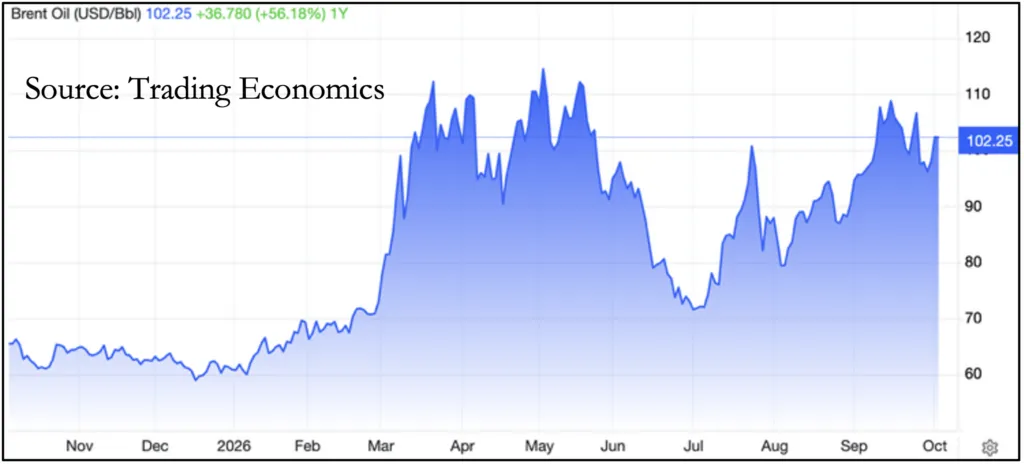
This comes even as crude exports from the Middle East returned to their pre-war average in September. Although tanker traffic through the Strait of Hormuz remains more than a quarter below pre-war levels, producers have closed the gap by rerouting crude oil around the strait, through Saudi Arabia’s East-West pipeline to the Red Sea and through the UAE’s pipeline to Fujairah on the Gulf of Oman.

With Middle East crude volumes back to pre-war levels, why haven’t crude prices settled back more? For one thing, oil inventories are badly depleted. According to the IEA, as of August, global inventories are down 410 million barrels since the war began. Additionally, there remains real risk of escalation in the conflict that could cause long-lasting damage to oil production. Just in the past few weeks, there was the drone attack on the East-West pipeline, three commercial oil tankers struck by unknown projectiles in the Strait of Hormuz, and the announcement of a third US military carrier (led by the USS Theodore Roosevelt) scheduled to arrive in the Persian Gulf with around 10,000 troops after the midterm elections.
Crude volumes have recovered but the region’s exports of refined fuels such as gasoline, diesel and jet fuel are still running at only about half their pre-war level. The Gulf isn’t just an oil field; it’s also a major refining hub that exports refined products. Oil producers in the region have managed to find workarounds for crude; refined fuels don’t have such alternatives available. Consequently, heating oil and diesel prices are up more than 100% from a year ago. Over the same period, jet fuel and gasoline prices are up 84% and 78%, respectively.
On October 1, the benchmark 10-year Treasury yield reached 5.34% and the 30-year yield rose to 5.69%, the highest levels for both since 2002, signifying a major selloff in the bond market. Some may point to the Federal Reserve as the culprit, but its role has been relatively modest. While short-term yields are controlled by the Fed, longer-term yields such as the 10-year and 30-year are market-driven. There are more important forces pushing these longer-term rates higher.
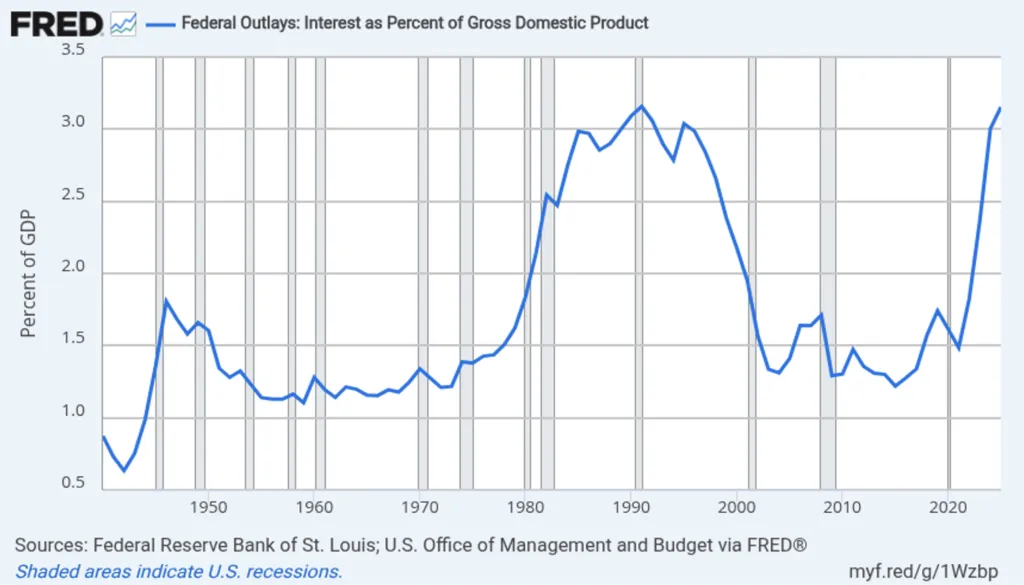
The Federal debt has now surpassed $40 trillion, and the 2026 deficit is expected to run near $2.1 trillion, about 6.4% of GDP, in an economy with low unemployment. At this point, federal interest costs have risen from 1.5% of GDP in 2021 to a projected 3.3% (according to the Congressional Budget Office) in 2026, which would surpass the previous high of 3.2% in 1991. This cuts at the US government’s credit quality and implies a steady flood of new Treasury supply is coming that investors must absorb. September’s recent 30-year treasury auction cleared the highest yield since 2001 at 5.308%.
The additional supply isn’t just coming from the Treasury market either. Goldman Sachs estimates that there has already been nearly $500 billion in AI-related debt issuance so far in 2026, with hyperscalers accounting for around 40% of that total. Macquarie has argued that the massive government borrowing combined with historic corporate debt issuance has had a bigger impact on interest rates this year than stubborn inflation and the Federal Reserve.

The bond market rout is not unique to America. There is a repricing occurring around the world. Japan’s 10-year JGB yield reached 3.1%, its highest level since 1996; Britain’s 30-year gilt topped 6% for the first time since 1998. Japan matters most for Treasuries for a couple of key reasons: 1) Japan is the largest foreign holder of US Treasuries and 2) more importantly, the country’s currency has been the target of the yen carry trade for over a decade. This trade, which came into fashion in 2013 amidst Prime Minister Shinzo Abe’s aggressive easing policies, involves borrowing yen at low interest rates and exchanging it into other currencies to invest in higher yielding assets. While the overall amount of the yen carry trade is difficult to estimate, cross-border yen borrowing jumped to $2.34 trillion in March, according to Jefferies. The investment bank points out that total cross border yen borrowing rose 67% since December 2021.
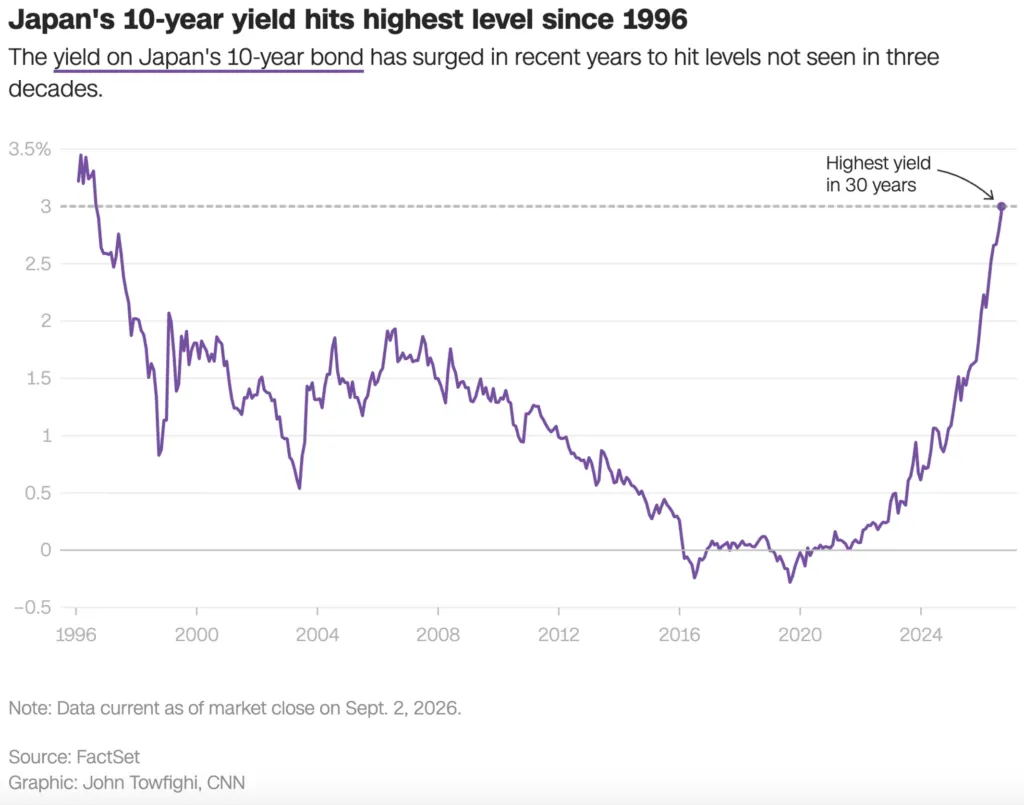
With Japanese bond yields rising to multi-decade highs, the attractiveness of the yen carry trade has partially diminished; carry trade investors are increasingly switching to the Swiss franc as a viable alternative. The unwind of the yen carry trade puts downward pressure on JGB yields and upward pressure on Treasuries, which prompted the coordinated US-Japan $85 billion yen intervention in August.
S&P 500 companies are expected to report Q3 earnings growth of 29.5%, which if realized would be the third straight quarter above 25% in 2026. Goldman Sachs has estimated that roughly half of this year’s earnings growth is attributed to AI infrastructure spending. Efficiency is also assisting – Q3 net margins are estimated at 15.0%, compared to a 5-year average of 12.6%.
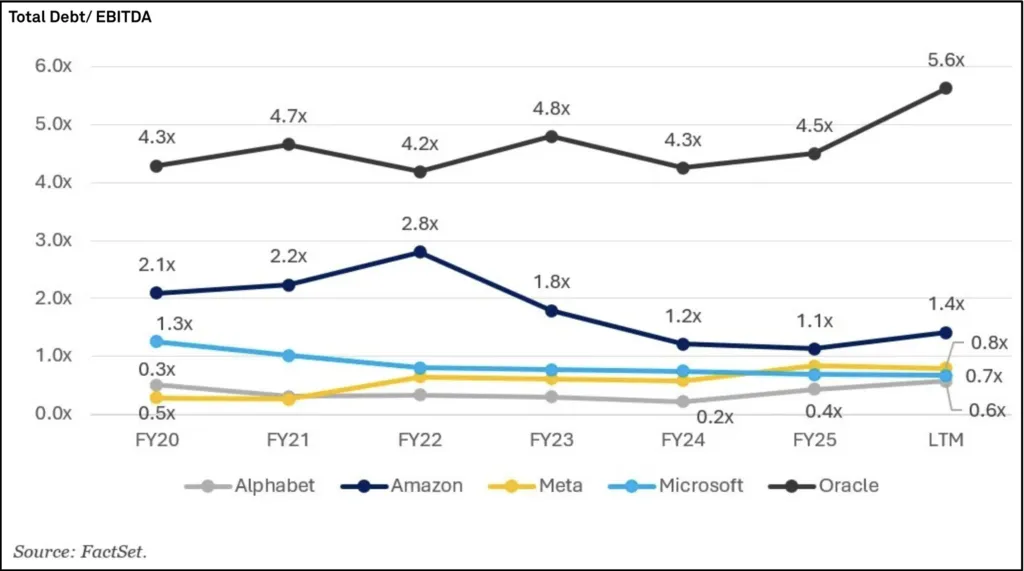
While these investments have been increasingly funded with debt, its share of capex is just 32% as of mid-2026 according to FactSet (from 9% in 2024). Of the five major hyperscalers in America (Alphabet, Amazon, Meta, Microsoft, and Oracle), four of them still have debt/EBITDA ratios of around 1x or less – the exception being Oracle, indicating the balance sheets of those other four companies remain fairly strong.
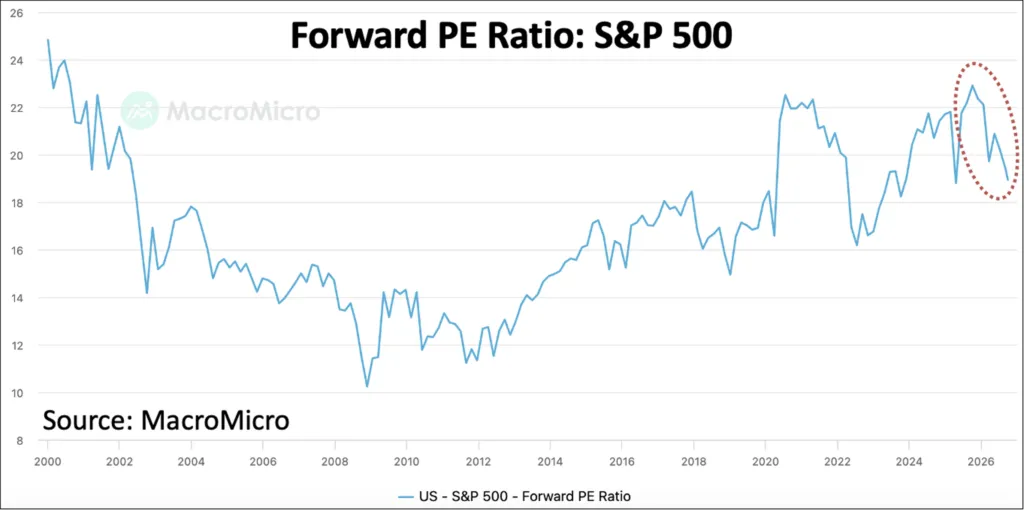
Although this level of investment is expected to be temporary, valuations are offering some cushion. With expected 12-month earnings increasing faster than prices, the forward P/E (price/earnings) ratio has declined to 19.0x, well below the 22.9x multiple seen 12 months ago. At this point, the valuation is even below the 10-year average of 19.1x. This year’s stock performance has been entirely powered by profit growth, and investors are not paying up for the recent earnings boom.
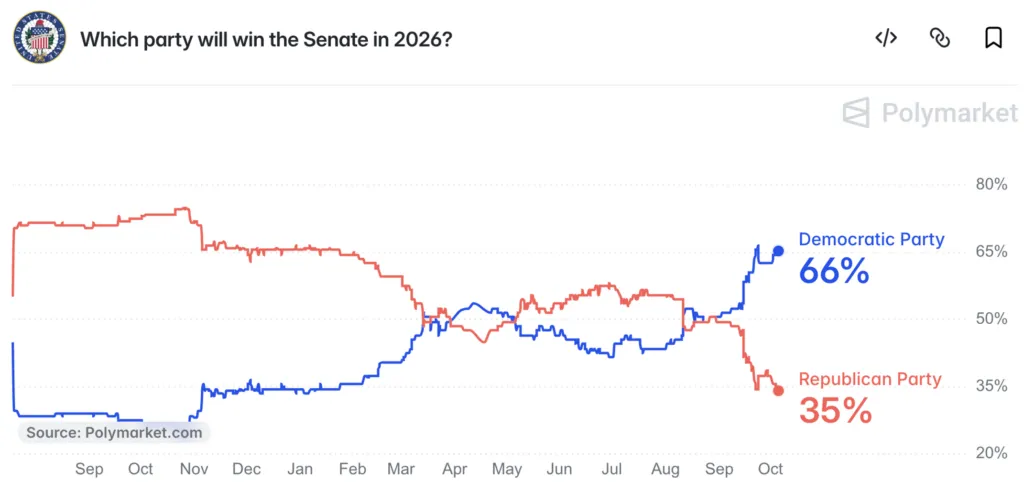
With the midterm elections less than a month away, prediction markets see a Democratic takeover of the House as close to a sure thing, with current odds at 93%. The Senate is more competitive but the odds have shifted sharply. A month ago the Senate looked like a coin flip; now oddsmakers are pricing about a two-in-three chance that Democrats win control of that chamber also.
Political forecasting models see a bit less certainty. Decision Desk HQ pts Democrats at 76% for the House and 56% for the Senate, according to The Hill.
From a fiscal perspective, the key fact is that President Trump keeps his veto power through January 2029. A gridlock would likely reduce risk of a borrowing surge but would do little to improve the deficit. It could, however, raise the risk of another government shutdown in December. Federal funding was extended through the Continuing Appropriations and Extensions Act only until December 11, 2026.
Many major fiscal and policy issues remain unresolved. The lame duck session, which begins on November 9, will come shortly after the November 3 elections and before the newly elected 120th Congress is sworn in on January 3, 2027. During this period, departing members will be freed from voter pressure and the losing party will be motivated to act quickly to pass its priorities before losing power. The current 119th Congress will have eight weeks to try to resolve key issues that will include full-year government funding and paying for the Iran War.
